- Get link
- X
- Other Apps
By
Admin

- Get link
- X
- Other Apps
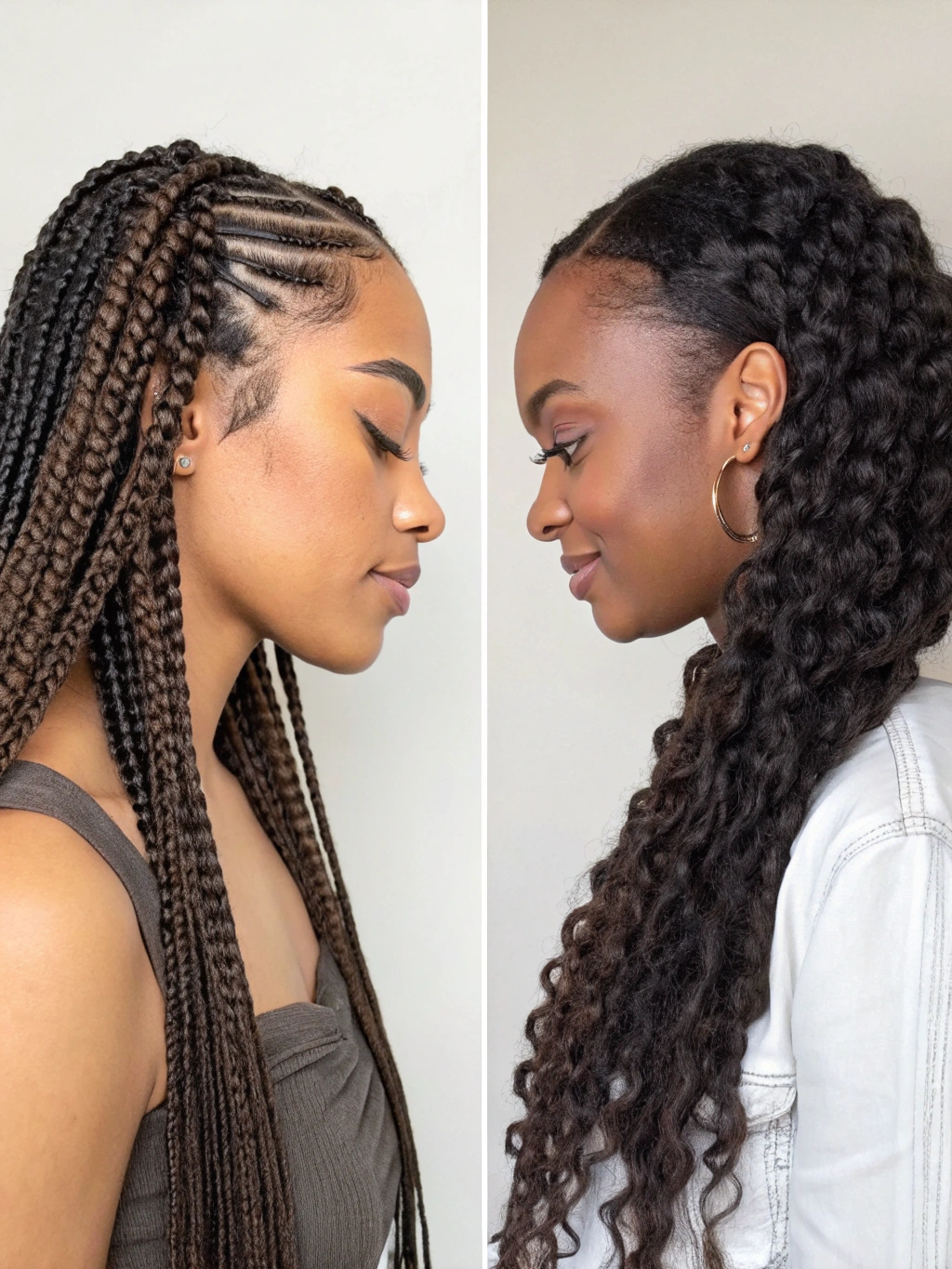
Both styles offer stunning looks and protection, but they're not the same. Understanding the differences between box braids vs knotless styles will help you make the best choice for your hair needs and lifestyle. Let's break down everything you need to know about these two protective hairstyles.
Box braids are a classic protective hairstyle that's been popular for decades. The braiding technique starts by creating small square or box-shaped sections throughout your scalp. Then, synthetic or natural hair extensions are added right at the root using a knot technique.
The stylist feeds the braiding hair into your natural hair at the base. This creates a visible knot where the extension starts. The braid continues down to your desired length. The result is thick, rope-like braids that can last for weeks.
Box braids come in various sizes, from micro to jumbo. They're versatile and can be styled in countless ways. You'll find them on runways, in music videos, and in everyday life.
Knotless braids are a newer innovation in protective styling. They've gained massive popularity in recent years. The main difference lies in how the braiding hair gets added to your natural hair.
Instead of knotting the extension at the root, knotless braids start with your natural hair only. The stylist gradually feeds in small amounts of braiding hair as they work down the braid. This creates a seamless, natural-looking start without any visible knots.
The technique takes more time and skill. But many people prefer knotless braids because they look more natural and feel lighter. The gradual feeding method creates less tension on your scalp from the start.
The biggest difference between box braids vs knotless hairstyles is how they begin.
Box Braids:
Knotless Braids:
This fundamental difference affects everything else about these styles. The installation method determines how they look, feel, and how long they last.
If you've ever had braids that hurt for days after installation, you know how important comfort is.
Box Braids:
Knotless Braids:
For people with sensitive scalps or those worried about hair loss, knotless braids offer a gentler alternative. The gradual feeding technique means less stress on your follicles.
How your braids look matters just as much as how they feel.
Box Braids:
Knotless Braids:
Many people choose knotless braids when they want a more subtle, natural-looking style. The seamless beginning makes them look like they could be your real hair. If you're exploring different small box braids styles, consider how the size affects the overall appearance.
Both styles are protective and can last for weeks, but there are differences.
Box Braids:
Knotless Braids:
Both styles need regular care. You'll need to moisturize your scalp, sleep with a satin bonnet, and avoid excessive manipulation. The difference is that box braids generally hold their neat appearance longer.
Your budget and schedule matter when choosing between these styles.
Box Braids:
Knotless Braids:
The price difference reflects the additional time and skill required for knotless braids. The feeding technique demands more precision and patience from your stylist.
Neither style is universally better. Your choice depends on your specific hair needs and preferences.
Choose Box Braids If:
Choose Knotless Braids If:
Both styles work for all hair types. However, people with finer hair or weak edges often do better with knotless braids. The reduced tension helps protect delicate areas.
Regardless of which style you choose, proper care extends the life of your braids.
Daily Care Tips:
Washing Routine:
Styling Precautions:
Never leave braids in too long. Both box braids and knotless styles can cause damage if kept beyond their lifespan. Your natural hair continues to grow and shed, which can lead to matting and breakage.
Myth 1: Knotless braids don't cause any tension
Truth: While they cause less tension than box braids, knotless braids still create some pull on your hair. Poor installation or excessive tightness can still damage your scalp.
Myth 2: Box braids always hurt
Truth: Properly installed box braids shouldn't cause severe pain. If your braids hurt badly for more than two days, they're too tight. A skilled stylist knows how to create secure braids without excessive tension.
Myth 3: Knotless braids last just as long as box braids
Truth: The lack of a knot means knotless braids typically don't last as long. The extensions can slip more easily, especially near the ends.
Myth 4: You can't swim with braids
Truth: You can swim with both styles. Just wet your braids beforehand, wear a swim cap, and wash thoroughly afterward. Both box braids and knotless braids can handle water.
Myth 5: Braids make your hair grow faster
Truth: Braids don't speed up hair growth. They protect your hair from damage, which helps you retain length. Your hair grows at the same rate whether braided or not.
Both box braids and knotless braids offer excellent protection for your natural hair. They're beautiful, versatile, and give you a break from daily styling.
The right choice depends on your priorities. If longevity and budget matter most, box braids win. If comfort and natural appearance are your top concerns, knotless braids are worth the extra investment.
You don't have to pick just one forever. Many people alternate between box braids vs knotless styles based on their current needs. Try both and see which one works best for your lifestyle and hair goals.
Remember that proper installation matters more than the style itself. A skilled stylist who understands tension, technique, and hair health will give you great results with either option. Don't sacrifice your hair health for a style. Always communicate with your stylist about your comfort level during installation.
Whether you choose traditional box braids or trendy knotless braids, you're making a great decision for protecting your natural hair. Both styles celebrate natural beauty and give you endless styling possibilities. The key is finding what works best for your unique hair journey.
Ready to book your next protective style appointment? Now you have the knowledge to make an informed decision about box braids vs knotless brairstyles. Your perfect braid style is waiting!


Comments
Post a Comment